
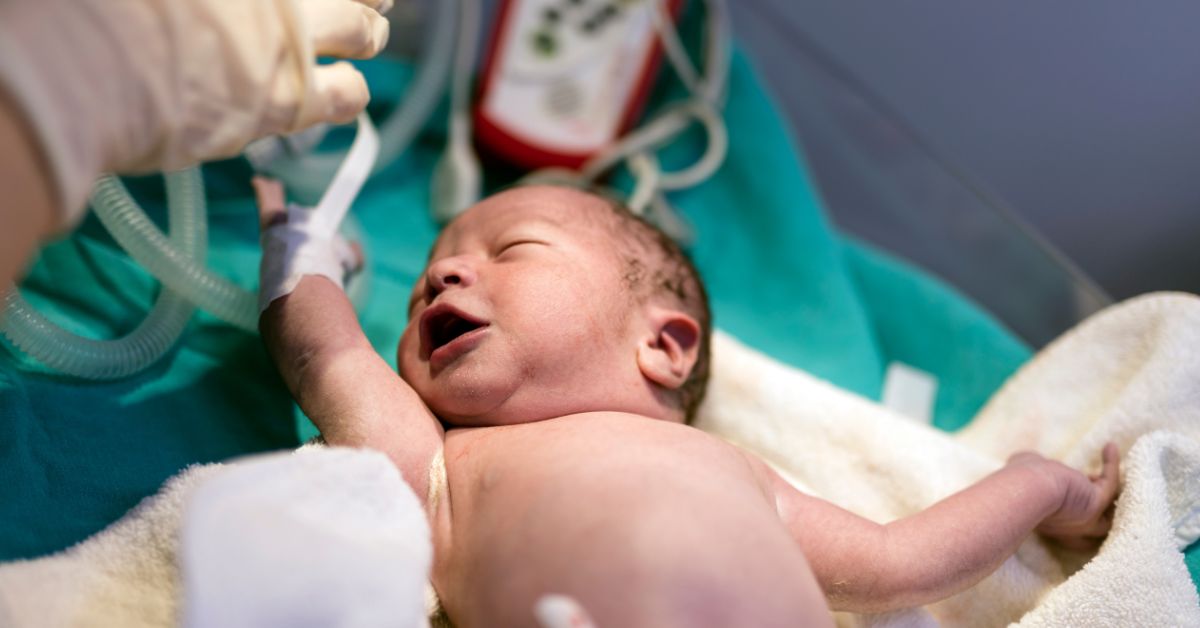
Maybe your baby wasn’t breathing properly at delivery. Maybe the medical team suddenly rushed into action, and your baby was unexpectedly admitted to the NICU. Or perhaps a doctor used a term like “hypoxia” or “HIE,” and you have been trying to understand what it means ever since.
Hypoxia in infants can be a serious medical concern. Understanding the warning signs, possible causes, and long-term effects can help you make sense of what happened and know what questions to ask.
What Is Hypoxia in Newborns?
Hypoxia in newborns occurs when the body’s tissues and organs do not receive enough oxygen. It can happen before birth, during labor and delivery, or shortly after birth.
The brain is especially sensitive to low oxygen levels. If infant oxygen deprivation is severe or lasts too long, it can cause brain injury and other complications.
Hypoxia vs. Hypoxemia: What’s the Difference?
Hypoxemia means there is too little oxygen in the blood, while hypoxia means the body’s tissues are not receiving enough oxygen.
If hypoxemia is not corrected, it can lead to hypoxia.
How to Tell If a Baby Is Not Getting Enough Oxygen
Some warning signs are detected through fetal monitoring, while others become apparent after birth.
Signs Before and During Labor
Before birth, medical teams may watch for:
- Reduced or absent fetal movement
- Abnormal fetal heart rate patterns, including prolonged decelerations, absent variability, or an unusually slow heart rate
- Meconium, or the baby’s first stool, in the amniotic fluid
Fetal heart rate monitoring helps medical teams assess how a baby is tolerating labor. Certain abnormal patterns can signal a problem and may require further evaluation or prompt intervention.
Meconium in the amniotic fluid can sometimes occur when a baby is under stress, but it does not necessarily mean the baby is experiencing hypoxia.
When warning signs appear during labor, the medical team’s response can be just as important as recognizing them.
Signs After Birth
After delivery, signs that a newborn may be having trouble getting enough oxygen can include:
- Blue or dusky skin, particularly around the face and mouth
- A weak, absent, or unusually high-pitched cry
- Poor muscle tone or a baby who appears “floppy”
- Weak or absent reflexes
- A low heart rate
- Labored breathing or visible pulling in of the chest with each breath
- Grunting or gasping
- Low Apgar scores
A newborn’s heart rate is particularly important during resuscitation. Current American Heart Association and American Academy of Pediatrics guidelines call for ventilation when a newborn has a persistent heart rate below 100 beats per minute despite initial steps. If the heart rate remains below 60 despite effective ventilation, chest compressions are recommended.
Doctors also use the Apgar score to assess a newborn’s condition at 1 and 5 minutes after birth. If the 5-minute score is below 7, they repeat it every 5 minutes for up to 20 minutes. However, a low score does not by itself prove that a baby experienced hypoxia.
Many of these signs can have causes other than oxygen deprivation. Parents should not try to diagnose hypoxia themselves. Still, they can ask the medical team about abnormal fetal heart rate patterns, oxygen levels, Apgar scores, and any resuscitation their baby required.
Common Causes of Fetal Hypoxia During Labor
Several complications can interfere with a baby’s oxygen supply during labor. Common causes of fetal hypoxia include:
- Maternal Factors: High or low blood pressure, preeclampsia, or infections
- Placental or Umbilical Cord Problems: Placental abruption, placenta previa, umbilical cord prolapse, cord compression, or a tight nuchal cord, which occurs when the umbilical cord is wrapped tightly around the baby’s neck
- Delivery Complications: Prolonged or obstructed labor, shoulder dystocia, uterine rupture, or a delayed response to signs of fetal distress
These complications can affect oxygen delivery in several ways, such as reducing blood flow through the placenta, compressing the umbilical cord, or making labor harder for the baby to tolerate.
Some causes of fetal hypoxia during labor cannot be prevented. Others may be foreseeable or manageable when medical professionals recognize warning signs, monitor the baby appropriately, and respond promptly.
Possible Injuries and Long-Term Effects of Oxygen Deprivation at Birth
The long-term effects of oxygen deprivation at birth depend on how severe the oxygen loss was and how long it lasted. Some children recover without lasting problems, while others may need ongoing medical or developmental care.
Possible complications include:
- Hypoxic-Ischemic Encephalopathy (HIE): A type of brain injury caused by reduced oxygen and blood flow. HIE may be diagnosed shortly after birth when a baby shows signs of neurological problems.
- Cerebral Palsy (CP): A group of disorders affecting movement, posture, and muscle tone. In some cases, CP can result from brain damage associated with oxygen deprivation around the time of birth.
- Developmental Delays: Delays involving movement, speech, learning, or other developmental milestones may not become apparent until months or even years later.
- Other Complications: Some children may experience seizures, hearing loss, or vision problems.
For newborns with moderate-to-severe HIE who meet treatment criteria, therapeutic hypothermia, also called cooling therapy, is ideally started within six hours of birth. The treatment can reduce the risk of death or significant disability.
Because some effects may not be apparent right away, regular follow-up can help parents and doctors monitor development and identify concerns as early as possible.
When Hypoxia in a Newborn May Be Considered Medical Malpractice
Hypoxia is not always preventable, and its occurrence does not by itself mean medical malpractice happened. Some emergencies occur even when doctors and nurses provide appropriate care.
However, hypoxia in infants may raise questions about medical negligence when the care involved:
- Inadequate fetal heart rate monitoring
- Missed signs of fetal distress or an inadequate response to them
- An unreasonable delay in ordering a C-section when one was medically necessary
- A delay in appropriate treatment after birth
- Improper newborn resuscitation
Determining whether medical negligence contributed to a baby’s injuries usually requires reviewing fetal monitoring strips, labor and delivery records, test results, and resuscitation records. An independent OB/GYN or neonatologist may also need to evaluate whether the care met accepted medical standards.
The hospital’s explanation of what happened is important, but it does not necessarily answer every question about the care provided. An independent medical review can help determine whether the hypoxia was an unavoidable complication or whether a preventable delay or other error contributed to the baby’s injuries.
How Beam Legal Team Can Help
Beam Legal Team has more than 40 years of experience handling obstetrical malpractice and birth injury cases and has recovered more than $1 billion in verdicts and settlements for families nationwide. Our practice includes cases involving HIE, cerebral palsy, and other serious birth injuries.
If your newborn showed signs of hypoxia and you are wondering whether the resulting injury could have been prevented, we can help you understand what happened and what options may be available. You may be entitled to compensation if medical negligence contributed to your child’s injuries.
Contact our team for a free, no-obligation consultation. You don’t pay us anything unless we get money for you.