
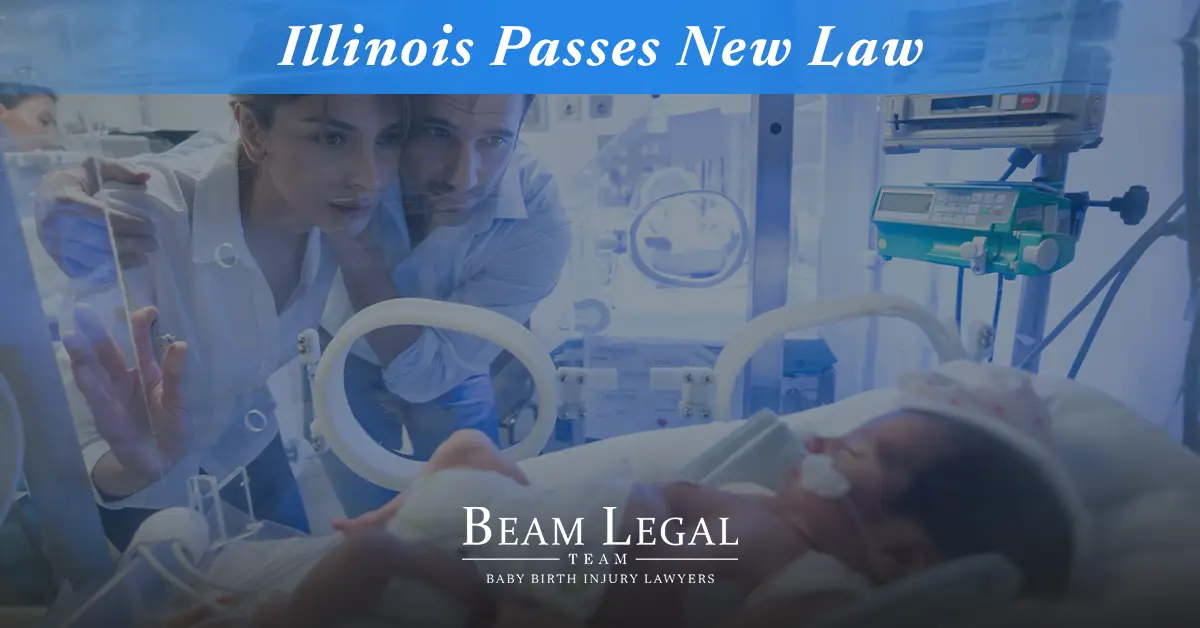
If your baby is in the NICU, the last thing you should be doing is calculating how many vacation days you have left. Illinois lawmakers agree.
As of June 1, 2026, the new Illinois NICU leave law provides parents of babies in neonatal intensive care with unpaid, job-protected time off, in addition to any federal leave they qualify for.
What Is the Family Neonatal Intensive Care Leave Act?
The Family Neonatal Intensive Care Leave Act (NICLA) is an Illinois state law that grants parents the right to take unpaid time off while their child is hospitalized in a neonatal intensive care unit. Governor JB Pritzker signed it into law in August 2025, and it took effect on June 1, 2026.
The law uses a broad definition of “child.” It covers biological, adopted, and foster children, stepchildren, legal wards, and any child you are raising in the role of a parent. If your baby is in the NICU and you are the one caring for them, the law most likely applies to you.
Which Illinois Employers Are Covered
NICLA covers most employers in Illinois, but not the smallest ones. The amount of leave you can take depends on the size of your employer:
- 15 or fewer employees: Not covered. The law does not apply.
- 16 to 50 employees: Up to 10 days of unpaid, job-protected NICU leave.
- 51 or more employees: Up to 20 days of unpaid, job-protected NICU leave.
Unlike the federal Family and Medical Leave Act (FMLA), NICLA has no length-of-service requirement and no minimum hours. Part-time workers are covered. New hires are covered from day one. Whether you started your job last week or 10 years ago, you have the same right to use the leave.
How NICLA Leave Works With FMLA
NICLA does not replace FMLA. It stacks on top of it. If you qualify for both, you use your federal FMLA leave first, and then NICLA kicks in once your FMLA runs out, as long as your baby is still in the NICU.
The two laws differ in a few important ways:
- Eligibility is easier. FMLA requires 12 months of employment and 1,250 hours worked in the prior year. NICLA has neither requirement.
- The amount of leave is different. FMLA provides up to 12 weeks of leave for qualifying reasons. NICLA adds 10 or 20 days of NICU-specific leave on top of that.
- You control your PTO. FMLA allows employers to require employees to use accrued paid time off concurrently with FMLA leave. NICLA does not. You can choose to use PTO during your leave, but your employer cannot make you.
You can also take NICLA leave in chunks instead of all at once. The law allows intermittent use in increments as short as two hours, which helps when parents are alternating hospital shifts or balancing other children at home.
Job Protections and What Your Employer Cannot Do
NICLA is job-protected leave. That means several things in plain terms:
- Your health insurance continues. Your employer must keep your coverage in place during your leave.
- Your job is held for you. When you return, you go back to the same role or a substantially equivalent one, with no loss of accrued benefits.
- You do not have to find a replacement. Your employer cannot require you to cover your shifts or train a substitute as a condition of taking leave.
- Retaliation by your employer is illegal. Your employer cannot fire or demote you, reduce your hours, or punish you for using NICLA leave, asking about it, or supporting a coworker who uses it.
Verification: What Employers Can and Cannot Ask For
Your employer is allowed to ask for reasonable verification that your child is actually in the NICU. What they cannot do is demand private medical information protected by HIPAA or other privacy laws.
In practice, a short note from your baby’s NICU care team confirming the admission dates and expected length of stay should be enough. You do not have to share diagnosis details, treatment records, or anything else about your baby’s condition to use the leave the law provides.
What to Do if Your Rights Are Violated
If your employer retaliates against you, refuses to grant leave, or forces you to use PTO, you have 60 days from the last incident to act. You can file a complaint with the Illinois Department of Labor or bring a civil lawsuit in court.
Employers who violate the law can face civil penalties of up to $5,000 for each affected employee, plus unpaid wages and other damages.
NICLA disputes are employment law matters. If you believe your employer violated the law, the Illinois Department of Labor or an employment attorney may be able to help. For families whose NICU stay followed a difficult labor or delivery, another question may be whether a preventable birth injury occurred.
When a NICU Stay Points to a Possible Birth Injury
Many NICU admissions have nothing to do with medical error. Premature babies, twins, and infants with low birth weight or jaundice often need intensive care for reasons no one could have prevented. Most NICU parents are not dealing with a malpractice situation, and we are glad when that is the case.
But some NICU stays follow a difficult labor where something went wrong. Oxygen deprivation during delivery, an infection that should have been caught, a delayed C-section, or a mishandled delivery can lead to hypoxic-ischemic encephalopathy (HIE), seizures, brain injuries, or other lasting harm. Babies in these situations often spend weeks in the NICU receiving cooling therapy or other treatment.
If your baby ended up in the NICU after a labor or delivery that did not go the way it should have, you are allowed to ask questions about what happened. Our team has helped Illinois families understand whether a birth injury was the result of medical negligence for more than 40 years.
The Long-Term Cost of Caring for a Child With a Birth Injury
Ten or 20 days of unpaid leave is meaningful when your baby is in the NICU. It is not what most families need for the years that come after a serious birth injury. A child who was deprived of oxygen during delivery, who suffered brain damage, or who developed cerebral palsy because of a preventable mistake often needs a lifetime of care.
That care is expensive in ways most families do not understand until they live it:
- Medical bills add up fast. A single NICU stay can run into the hundreds of thousands of dollars. Surgeries, doctor visits, medications, and assistive equipment can keep adding to that total for years.
- Therapy is ongoing. Children with birth injuries often need physical therapy, occupational therapy, and speech therapy through childhood and into adulthood. Many also need behavioral and educational support.
- Home modifications and equipment are expensive. Wheelchairs, lifts, accessible vehicles, ramps, and adapted bathrooms are common and costly. So are feeding tubes, communication devices, and monitoring equipment.
- One parent often stops working. When a child needs constant care, families lose income and benefits and face higher expenses. That financial pressure does not go away.
This is the reality that medical malpractice claims are built to address. When a preventable error during labor and delivery causes a lifelong injury, the goal of a medical malpractice case is to make sure the family has the resources to provide the care their child will need for the rest of their life. That includes medical costs, lost income, and the long-term support most families could never afford on their own.
Frequently Asked Questions
Is the Illinois NICU leave law the same as FMLA?
No. NICLA is a separate Illinois state law that adds NICU-specific leave on top of any FMLA leave you qualify for. FMLA covers a broader range of medical and family situations and provides up to 12 weeks of leave. NICLA covers only NICU stays and provides 10 or 20 days depending on your employer’s size.
Do I have to use my PTO before taking NICLA leave?
No. Your employer cannot require you to use your accrued paid time off before using NICLA leave. You can choose to use PTO during your leave if you want to be paid.
Does NICLA apply if I work part-time or was just hired?
Yes. NICLA has no minimum hours and no length-of-service requirement. As long as your employer has 16 or more employees, you are covered from your first day on the job, regardless of whether you work full-time or part-time.
Can I take NICU leave in small chunks instead of all at once?
Yes. The law allows intermittent leave in increments as small as two hours. That flexibility is built into the statute so parents can alternate hospital shifts, attend specific appointments, or handle care for other children without using a full day.
What if my employer asks for my baby’s medical records?
Your employer can ask for reasonable verification of the NICU stay, but they cannot demand HIPAA-protected medical details. A note from your baby’s NICU care team confirming the dates of admission is generally enough. You are not required to share diagnosis or treatment information.
Talk to an Experienced Birth Injury Lawyer About What Happened
If your baby spent time in the NICU after a delivery that left you with questions, you deserve real answers. At Beam Legal Team, our experienced birth injury lawyers have spent more than 40 years helping families understand what happened during labor and delivery and whether medical negligence played a role.
You may be entitled to compensation, and you do not pay us anything unless we get money for you. Call (866) 371-0909 or contact us today for a free consultation. Let us fight for the money you deserve.